

Search behaviour is changing rapidly.
Tools like ChatGPT, Perplexity, Claude, Gemini, and Microsoft Copilot are becoming part of how people discover information online. Rather than searching Google and clicking through multiple websites, users are increasingly asking AI tools questions and following the recommendations provided.
For businesses, charities, schools, and other organisations, this creates both opportunities and challenges.
The opportunity is that AI platforms can now drive visitors directly to your website.
The challenge is that many organisations have no idea this is happening.
If you’ve noticed unexplained increases in direct traffic, unexpected landing page visits, or conversions that appear to have no obvious source, there is a good chance some of that activity is coming from AI-powered search tools.
Unfortunately, Google Analytics 4 does not currently provide a dedicated report for AI traffic.
Instead, visits from AI platforms are typically grouped within referral traffic, making them easy to overlook.
The good news is that with a simple custom report, you can start identifying which AI platforms are sending traffic to your website and how those visitors behave once they arrive.
Why tracking AI traffic matters
Most organisations already monitor traffic from search engines, social media platforms, email campaigns, and paid advertising.
AI-driven traffic should now be part of that picture.
Understanding where visitors are coming from helps you make better marketing decisions. If AI tools are regularly recommending certain pages, this can provide valuable insight into what content is performing well and which topics resonate with users.
It can also help you identify new opportunities for content creation, search visibility, and website optimisation.
As AI-powered search continues to grow, understanding this traffic source is likely to become increasingly important.
Which AI platforms send website traffic?
Several AI platforms now regularly link users to external websites.
The most common sources we currently see include:
ChatGPT, which often links to websites within responses and recommendations.
Perplexity, which actively cites and references online sources as part of its search experience.
Google Gemini, which can direct users towards recommended content and resources.
Claude, Anthropic’s AI assistant, which increasingly references external information sources.
Microsoft Copilot, which is integrated into Microsoft’s search ecosystem and can drive referral traffic.
Depending on your industry, you may also encounter additional AI platforms as adoption continues to grow.
How to create an AI traffic report in GA4
Google Analytics 4 allows you to create a custom report that filters traffic based on referral sources.
This makes it possible to isolate visits originating from AI tools.
Step 1: Create a custom detailed report
Within Google Analytics 4, navigate to the Library section and create a new Detail Report.
Choose a blank report so you can build the report around the information most relevant to your organisation.
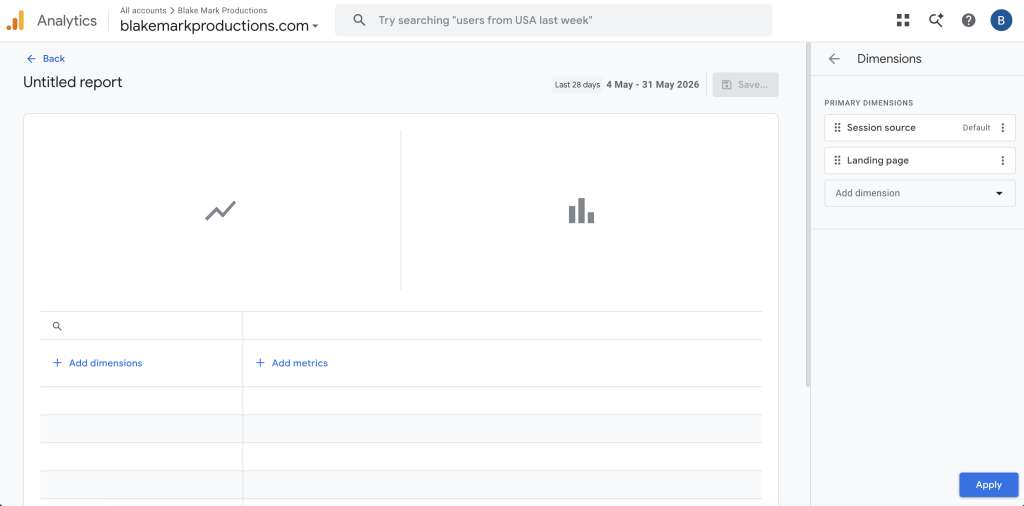
Step 2: Add your dimensions
To understand where visitors are coming from and which pages they are viewing, add:
- Session Source
- Landing Page
These dimensions will allow you to identify both the referring AI platform and the content attracting visitors.
Step 3: Add relevant metrics
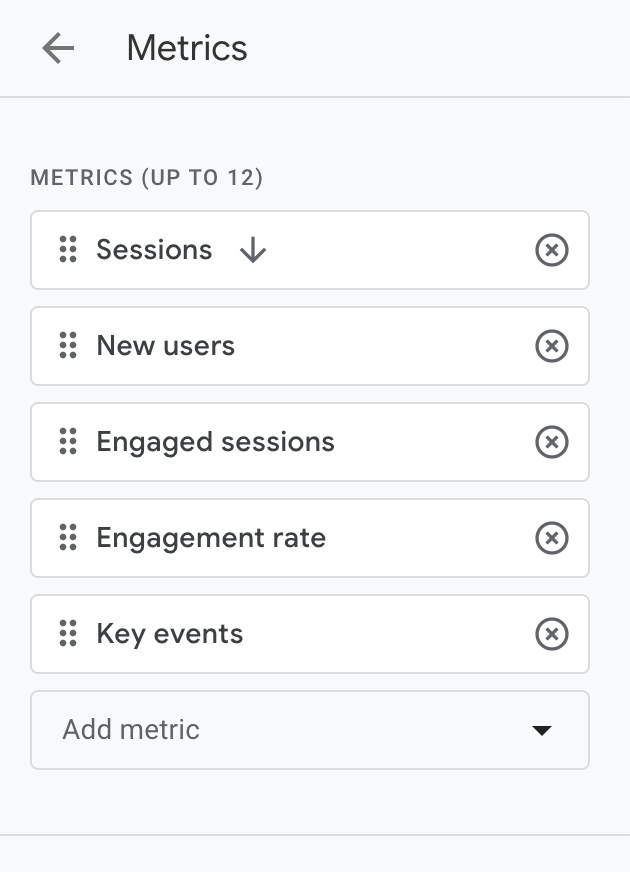
The metrics you choose will depend on your goals, but we generally recommend including:
- Sessions
- New Users
- Engaged Sessions
- Engagement Rate
- Conversions or Key Events
These metrics provide a useful overview of traffic quality and user behaviour.
Step 4: Filter for AI sources
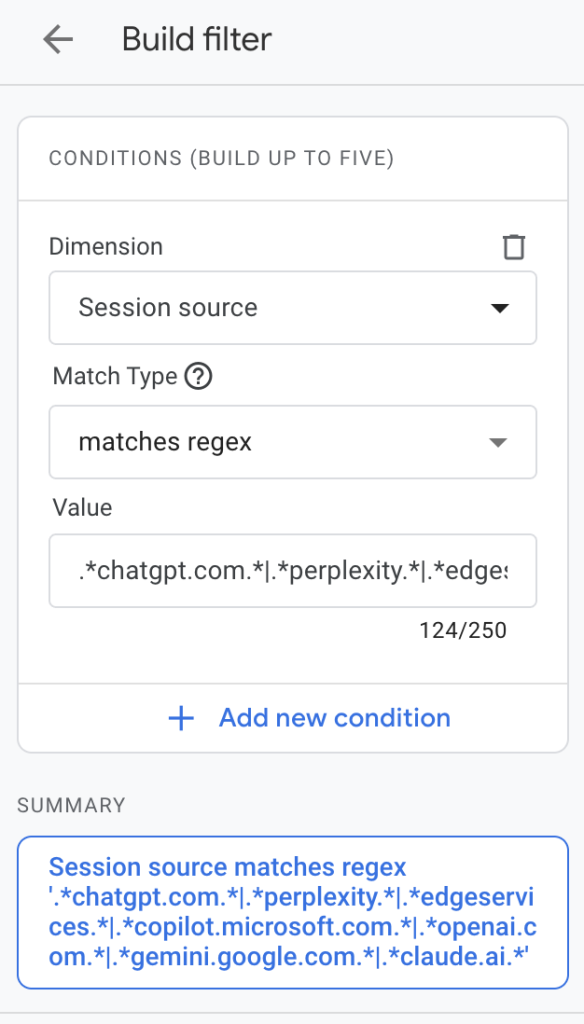
Apply a filter using Session Source and set the match type to Regex.
You can then use a regular expression similar to:
.*chatgpt.*|.*openai.*|.*perplexity.*|.*claude.*|.*gemini.*|.*copilot.*|.*edgeservices.*
As new AI platforms emerge, you can update this expression to include additional domains.
Step 5: Save your report
Save the report with a clear name such as “AI Traffic Overview” or “AI Referral Traffic”.
Once saved, you can review AI traffic alongside your wider marketing reporting.
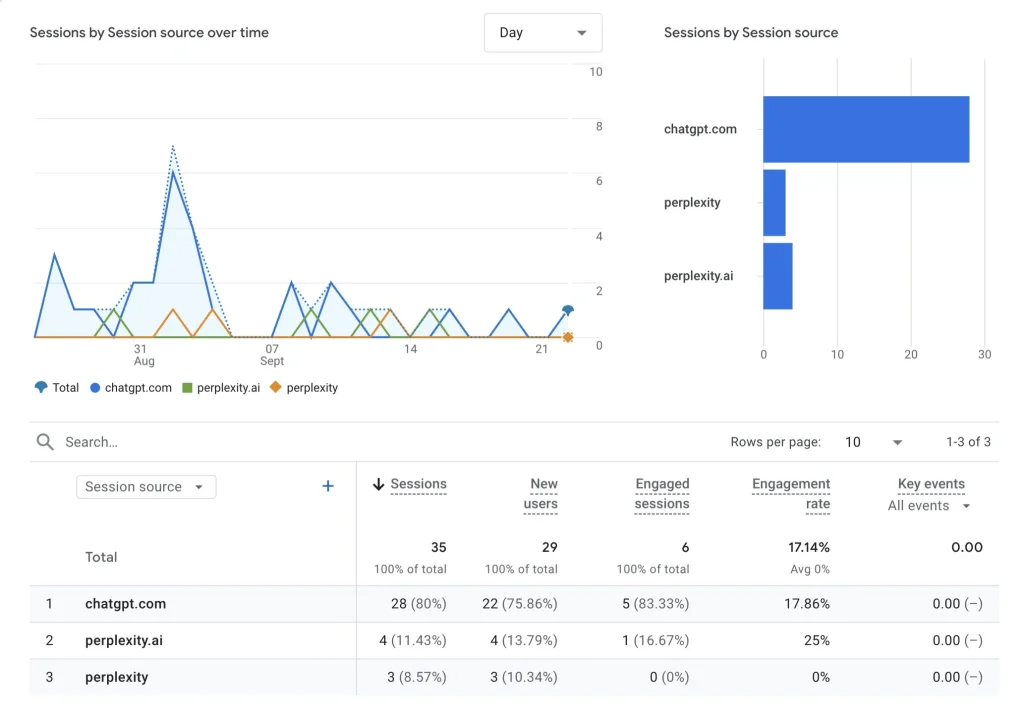
What your AI traffic data can tell you
Creating the report is only the first step.
The real value comes from understanding what the data reveals about user behaviour.
Which AI platforms are sending the most visitors?
Some organisations find that ChatGPT generates the majority of their AI traffic.
Others see stronger results from Perplexity or Microsoft Copilot.
Understanding where traffic originates helps you understand how your content is being discovered.
Which pages are being referenced?
One of the most useful insights often comes from reviewing landing pages.
If certain pages consistently attract AI traffic, there is a strong possibility that AI tools view that content as useful, relevant, and authoritative.
This can provide valuable direction for future content creation.
Are AI visitors engaging with your website?
Traffic alone is not enough.
Review engagement metrics to understand whether visitors remain on your website, view additional pages, or complete meaningful actions.
Strong engagement may indicate that your content aligns well with user intent.
Weak engagement may highlight opportunities to improve content quality or user experience.
Are AI visitors converting?
For organisations generating enquiries, donations, bookings, or purchases online, conversion data is particularly important.
You may discover that AI traffic behaves differently from traditional search traffic.
In some cases, AI-referred visitors may arrive with higher intent because they have already received recommendations and context before clicking through.
AI search is already influencing website traffic
Many organisations still view AI search as something that will become important in the future.
The reality is that it is already influencing how people discover websites today.
Whether you are a business generating leads, a charity attracting supporters, or a school promoting admissions, understanding how AI platforms interact with your content is becoming increasingly valuable.
Tracking AI traffic is not simply about monitoring another data source.
It is about understanding how search behaviour is evolving and ensuring your organisation remains visible wherever people are looking for information.
Need help understanding your website traffic?
At Blake Mark Productions, we help businesses, charities, schools, and growing organisations improve their online visibility through practical digital marketing strategies, SEO, website optimisation, and analytics reporting.
If you would like help understanding how people are finding your website or identifying opportunities to improve your digital performance, our team would be happy to help.
Book a free consultation today and let’s discuss your website performance and digital marketing strategy.