

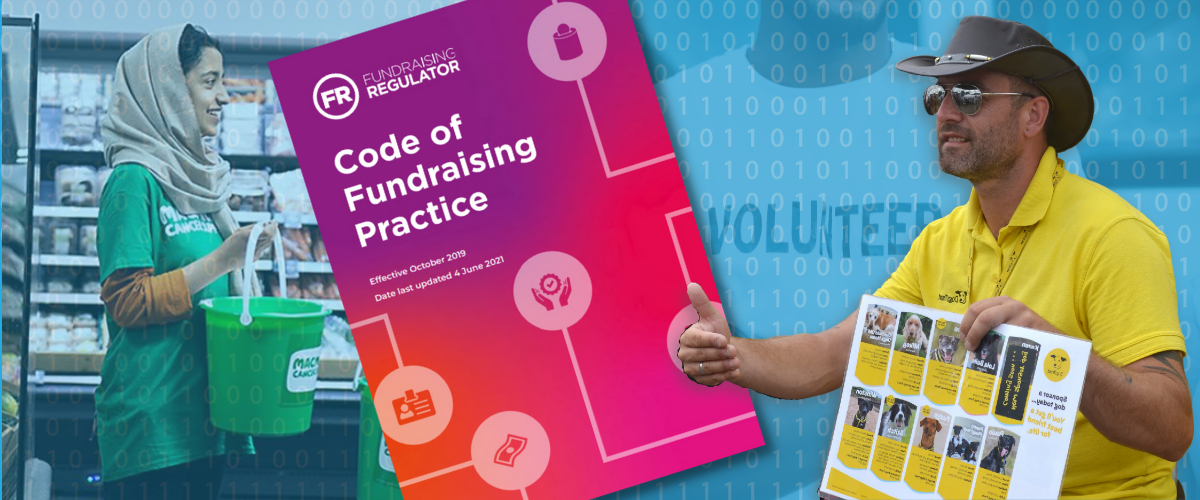
Marketing and fundraising are becoming increasingly difficult to separate.
A paid social campaign promoting a fundraising event, an email encouraging supporters to donate, a landing page built around regular giving or a video promoting a sponsored challenge may all be created by a marketing team, but they are also part of the charity’s fundraising activity.
That matters because once marketing is being used to ask people for money or other support for charitable purposes, the Fundraising Regulator’s Code of Fundraising Practice becomes relevant too.
The Code therefore shouldn’t sit solely with the fundraising team. Marketing teams need to understand it as well.
The current Code of Fundraising Practice came into effect on 1 November 2025 and sets the standards that apply to charitable fundraising across the UK. It covers far more than marketing, but because so much fundraising now happens through websites, social media, email, paid advertising, video and digital campaigns, marketers are increasingly responsible for how those standards are translated into public-facing communications.
What is the Fundraising Regulator Code?
The Fundraising Regulator is the independent regulator of charitable fundraising in England, Wales and Northern Ireland. Its Code of Fundraising Practice sets the standards organisations are expected to follow when asking the public for support.
At its core, the Code is about making sure fundraising is carried out in a way that is legal, open, honest and respectful. That sounds straightforward, but those principles influence far more than the fundraising ask itself.
They can affect the wording used in an advert, the claims made on a landing page, the information included in a social post, the way supporters are contacted and how fundraising involving third parties is presented.
For marketing teams, the important point is that the Code influences how fundraising is communicated, not just how it is organised.
Why does the Code matter to marketing teams?
Marketing is often the point where a fundraising idea becomes public.
A fundraising team might decide that the charity wants to recruit participants for an event, increase regular giving or launch a new appeal. Somebody still needs to turn that idea into a campaign.
That could involve writing ads, creating graphics, building landing pages, producing emails, filming video, setting up a Meta campaign and scheduling organic content. It is at that point that marketing decisions begin to affect fundraising compliance.
A campaign can look great and perform well from a marketing perspective without necessarily being communicated appropriately. A fundraising claim might be presented in a way that could mislead supporters, important information could be missing, the Fundraising Badge could be forgotten or campaign messaging could create more pressure than intended.
Email campaigns can also bring separate direct marketing and data protection requirements into the picture.
Fundraising compliance is part of good charity marketing.
It shouldn’t be something somebody remembers to check five minutes before a campaign goes live.
That is one reason we encourage charities to approach charity marketing strategy across fundraising, communications, digital and wider organisational objectives rather than treating each area separately.
What is the Fundraising Badge?
For most marketers, the Fundraising Badge is probably the most visible part of the Fundraising Regulator.
It is the familiar logo showing that an organisation is registered with the Fundraising Regulator. Registered organisations use it to demonstrate that they have committed to following the Code of Fundraising Practice.
The Regulator says registered organisations must display the badge on their fundraising materials. This includes communications used to ask for money or other property for charitable purposes across print, digital and video. Examples include donation pages, fundraising social media graphics, fundraising letters and advertising with a donation call to action.
The Fundraising Regulator’s badge guidelines also make clear that it does not expect the badge to appear on communications that are not about fundraising.
That distinction matters because the badge is not simply another logo to add to everything the charity publishes.
Does the Fundraising Badge need to appear on every charity social media post?
No.
A post explaining how somebody accesses a charity’s services is not automatically fundraising. Neither is a staff recruitment post, an organisational update, a general awareness post or a piece of educational content.
The question is what the communication is actually asking somebody to do.
If the purpose of a post is to ask people to donate, support a fundraising appeal or otherwise give money or property for charitable purposes, the badge requirement becomes relevant for registered organisations.
The purpose of the communication matters more than the channel it appears on.
A Facebook post, TikTok video, email, website page or printed leaflet can all be fundraising communications, but the same channels can also be used for completely different purposes.
Marketing teams need to be able to recognise the difference.
Social media fundraising still needs to follow the Code
Social media can feel more informal than other marketing channels, but that does not change the underlying standards.
The Fundraising Regulator’s guidance on fundraising through social media covers areas including advertising, donor relations and fundraising events. It expects organisations to provide clear information about who will benefit from fundraising, the intended impact of the activity and the basis for fundraising claims.
That is particularly important on platforms where space is limited.
A short social caption does not exist in isolation. If important information cannot reasonably be included within the post itself, the wider journey needs to make that information easy to find.
The landing page matters.
The campaign page matters.
The information somebody sees after clicking matters.
For marketers, the job is not simply to make somebody stop scrolling. It is to make sure the full journey gives them enough information to understand what they are being asked to support.
Paid social needs an extra layer of thought
This becomes particularly relevant with Meta Ads and other paid social campaigns.
Paid campaigns often have their own creative, copy, landing pages and approval process. They may also involve an external agency or a different team from the one managing organic content, which creates more opportunities for something to be missed.
If a fundraising campaign is being promoted through paid social, the creative should be reviewed as fundraising material rather than simply as another advert.
That means considering whether the Fundraising Badge should be present, whether claims are accurate, whether important information is clear or easily accessible and whether the wording gives supporters a fair understanding of what they are being asked to support.
Paid activity can also bring wider advertising rules into the picture. The Fundraising Regulator notes that where fundraising content amounts to advertising, the CAP Code may apply alongside the Code of Fundraising Practice.
This is one reason why charity paid campaigns need more than somebody who knows how to build an advert in Ads Manager.
The wider context matters too.
When we plan paid advertising for charities, campaign performance matters, but so does the way the organisation, the fundraising ask and the supporter journey are represented.
The Fundraising Badge is important, but it isn’t the whole Code
One of the easiest mistakes to make is to treat fundraising compliance as a logo exercise.
It isn’t.
Putting the Fundraising Badge in the bottom corner of a graphic does not automatically make the campaign compliant.
The actual communication still needs to be clear and accurate. Supporters should be able to understand what they are being asked to support, what the fundraising activity is intended to achieve and any important information that could reasonably influence their decision.
That is where marketing judgement becomes particularly important.
A marketer’s job is to make a message persuasive. Charity fundraising is no different.
But persuasion still needs boundaries.
Fundraising claims need to be accurate
Charity marketing is naturally emotional.
Campaigns often need to explain why support matters, what difference donations can make and why somebody should consider acting now.
There is nothing wrong with that.
The distinction is between creating a compelling campaign and creating one that gives supporters a misleading impression.
If a particular donation amount is said to fund something specific, the charity should be confident that the claim can be supported. If creative suggests money is being restricted to one particular activity, the wording needs to reflect what will genuinely happen to those funds. If a campaign makes a claim about the impact of a service, there should be a reasonable basis for it.
This is good marketing practice anyway.
Trust is difficult to build and very easy to damage.
For charities, that trust is particularly important because supporters are often being asked to give without receiving a conventional product or service in return. They need confidence in the organisation, the campaign and the way their support will be used.
Urgency and pressure are not the same thing
Marketers use urgency all the time.
Registration deadlines, limited spaces, campaign targets, early-bird pricing and matching periods can all be legitimate reasons to encourage somebody to act.
Fundraising communications still need to avoid unreasonable pressure.
That does not mean charity campaigns need to become emotionless or remove every sense of urgency. It means teams need to think about how those techniques are being used and how the message is likely to be received.
There is a clear difference between telling somebody that registration closes on Friday and creating messaging designed to make them feel personally guilty or unable to say no.
This becomes particularly important where communications may reach people in vulnerable circumstances.
The best charity marketing can be emotionally powerful without becoming manipulative.
Email fundraising brings other rules into the picture too
Fundraising email is a good example of why marketing teams cannot look at the Code in isolation.
The Fundraising Regulator has published guidance around fundraising marketing and the charitable purposes soft opt-in, while also making clear that organisations need to follow relevant ICO guidance and applicable law.
That means a fundraising email can involve several overlapping considerations.
The Code of Fundraising Practice matters, but so do UK GDPR, PECR, opt-out processes, the Fundraising Preference Service and the legal basis for sending the communication.
None of that should make charities afraid of email marketing.
Email remains an important part of building long-term relationships with supporters, particularly when organisations move beyond one-off appeals and start thinking about stewardship, retention and future engagement.
We explore that wider role in our article on digital marketing and donor retention.
The important thing is that fundraising, marketing and data decisions are not made separately when they all affect the same supporter.
What happens when something goes wrong?
Most charities are not deliberately trying to breach the Code.
Problems are much more likely to come from a missed process.
A campaign is produced quickly. An old template is reused. A badge is forgotten. An agency is not briefed properly. Someone assumes another team has checked the wording.
That does not mean the consequences disappear.
The Fundraising Regulator can investigate complaints about fundraising and make findings where it believes the Code has been breached. Depending on the circumstances, organisations may be asked to make changes, improve processes or take other action.
More serious issues, or a failure to follow recommendations, can lead to further regulatory action, including referral to other regulators or restrictions around use of the Fundraising Badge.
For a charity, that creates more than a compliance problem.
It can become a reputational one.
A public complaint or regulatory finding can affect supporter confidence, create additional work for senior teams and undermine the trust that fundraising activity relies on in the first place.
Marketing agencies need to understand the Code too
This is not only an internal charity issue.
If an agency is producing fundraising campaigns, it needs to understand the environment its client operates within.
That does not make the agency the charity’s legal adviser, and it does not remove the charity’s own responsibility for fundraising. But an agency working regularly with charities should be able to recognise when questions need to be raised.
Is this fundraising material?
Should the Fundraising Badge be present?
Has the client supplied the correct badge?
Is the claim clear?
Is any important information missing?
Does something need checking before the campaign goes live?
At Blake Mark Productions, we work across charity marketing strategy, paid advertising, websites, content and wider digital campaigns.
Understanding the charity sector therefore matters just as much as understanding the marketing platform.
A campaign is not successful simply because it generates clicks.
How those results are achieved matters too.
Build the Code into campaign planning
The easiest way to manage this is not to turn every marketing campaign into a lengthy compliance exercise.
It is to build the right questions into the process from the beginning.
When a campaign is first briefed, the team should know whether it involves fundraising and whether the organisation is registered with the Fundraising Regulator. Designers should have access to the correct badge files, agencies should understand where the badge needs to appear and fundraising claims should be checked before they reach final artwork.
Landing pages should contain the information supporters need, while email and data requirements should be understood before audiences are selected.
That is considerably easier than reaching final approval and discovering that half of the campaign needs changing.
Compliance works better when it is part of the brief, not part of the final proofread.
Good fundraising marketing comes back to trust
The Code of Fundraising Practice can sound like something that belongs mainly with governance, fundraising leadership or compliance teams.
In reality, much of what it is trying to achieve aligns with what good marketing should already be doing.
Be clear about what you are asking people to support.
Make claims you can stand behind.
Give people the information they need.
Respect the audience.
Do not mislead people.
Do not create unreasonable pressure.
Build trust.
The Fundraising Badge is one visible part of that, but the bigger question is whether the campaign itself reflects the standards behind it.
For charity marketers, that is why the Fundraising Regulator Code is worth understanding.
Not because every marketer needs to become a fundraising compliance specialist, but because the way a charity communicates its fundraising is part of the supporter experience.
And that experience has a direct impact on reputation, relationships and long-term fundraising.
If you are responsible for charity marketing, it is worth keeping the Code of Fundraising Practice within your team’s regular reference material rather than only looking at it when something goes wrong.
If your organisation needs help bringing fundraising, marketing and digital activity together into a clearer strategy, you can book a free discovery call with our team below.